Work / DSP Hub
One place for a delivery company's whole day.
Amazon Delivery Service Partners keep packages moving every single day. To run that day, most of them stitch together five or six different apps. DSP Hub replaces the stitching.
The problem
The tools were fine. The gaps between them weren't.
A DSP's morning moves fast: drivers check in, someone calls out, a van fails inspection, routes have to go out on time. The information to handle all of it existed, but it was split across separate subscriptions, spreadsheets and group chats. Dispatchers spent the morning switching between screens instead of running the road, and owners paid for every one of those tools.
The question behind DSP Hub was simple: what if the whole day lived in one place?
A day on DSP Hub
From the first check-in to the end-of-day report.
-
Morning
Roll call
Dispatch checks drivers in, covers call-outs and sees who is actually on the road today.
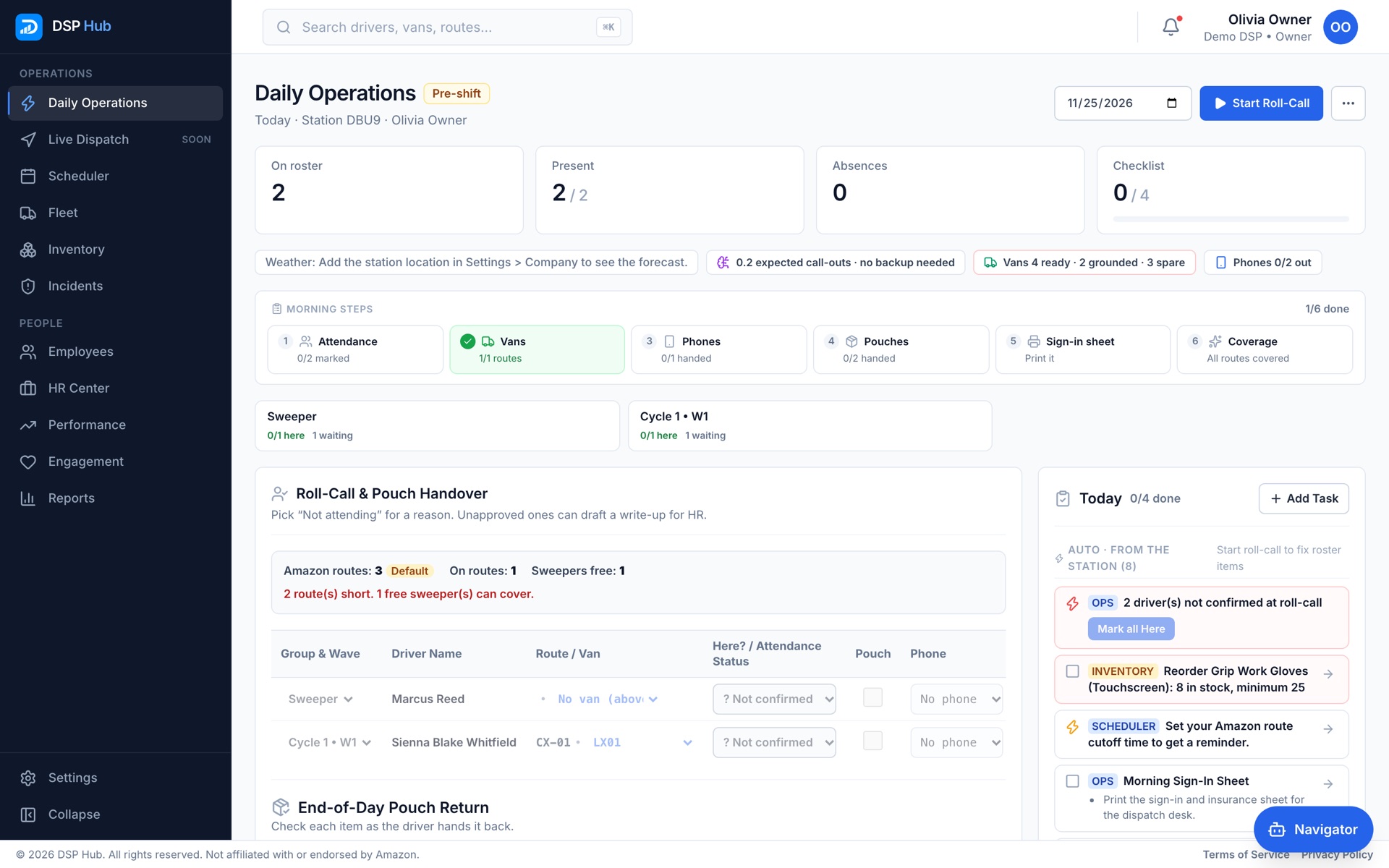
Daily operations: the roster, the morning steps and roll call. Demo data. -
Before routes go out
Fleet and inventory
Vans, inspections, repairs and equipment are tracked, so nothing goes out on the road unchecked.
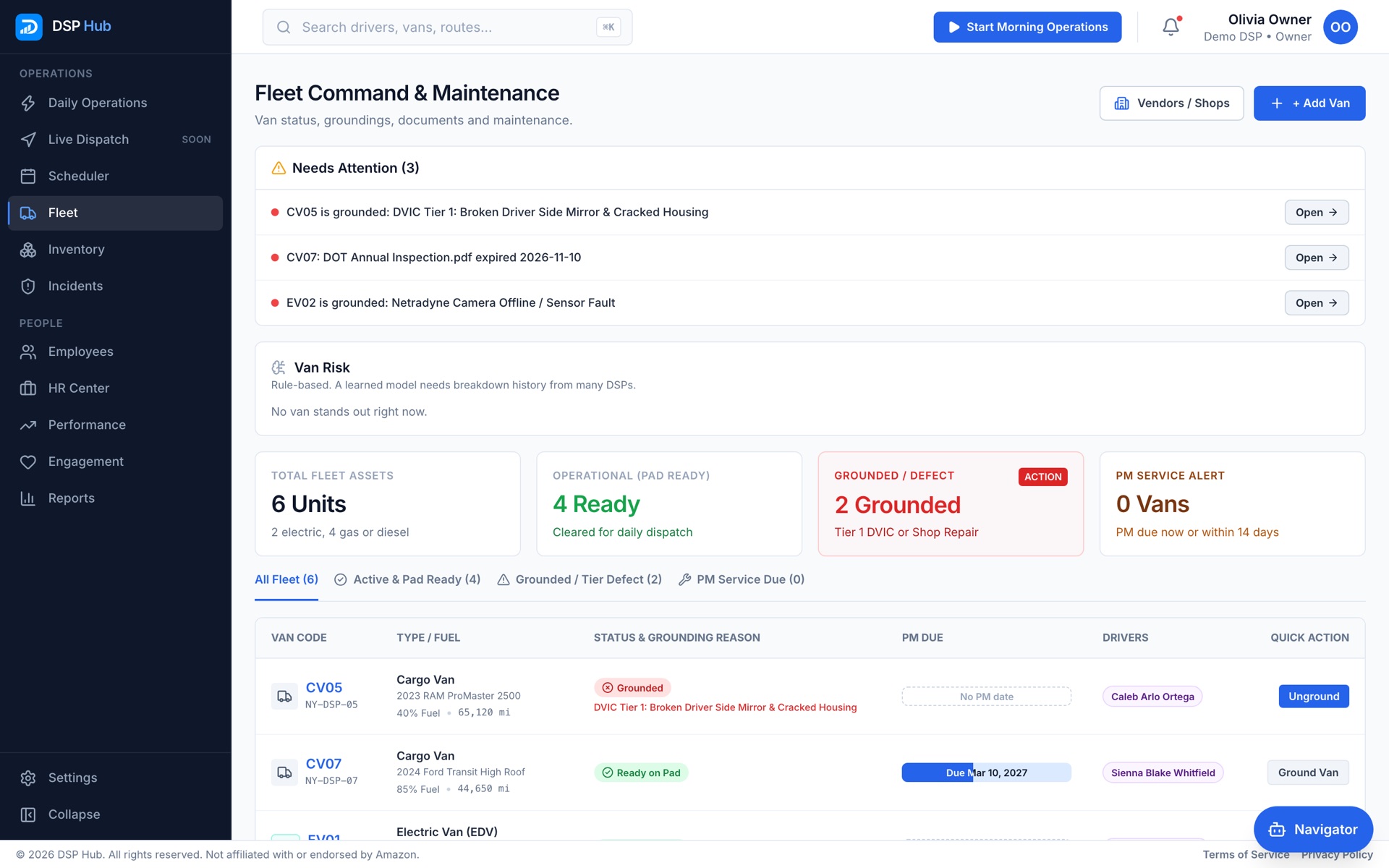
Fleet: grounded vans and expiring documents surface before loadout. Demo data. -
On the road
The driver app
Drivers see their schedule, ask for time off or a swap, read announcements and message dispatch from their phone. They only ever see their own data.
-
When something happens
Incidents
Accidents, injuries and tickets go into one log with photos, deadlines and the person handling each one.
-
Every week
Scorecards and scheduling
The files Amazon provides go straight in. DSP Hub shows where the station is losing points and which drivers to coach, and the next week's schedule is built with time-off and availability in view.
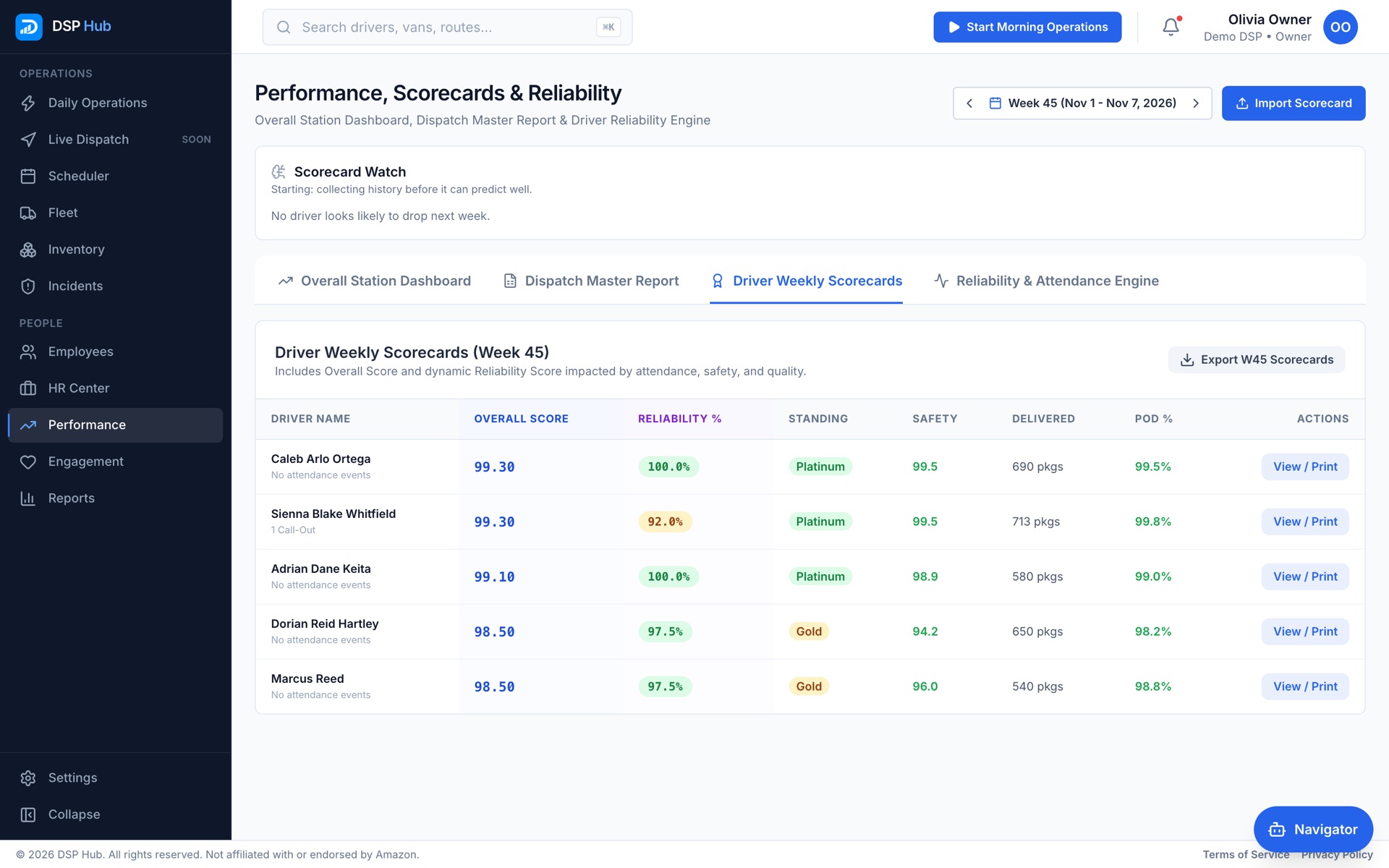
Driver weekly scorecards with reliability scoring. Demo data. -
End of day
The report
The day closes with an end-of-day report that lands in the owner's inbox.
Decisions
What shaped the product
Everything in every plan
Pricing follows fleet size, not features. A small DSP gets the same product as a large one, including the driver app, so nobody is back to stitching tools together to save money.
Work with Amazon's files, not around them
Scorecards come from the files DSPs already download. There's no new process to learn, just a clearer view of the one they have.
Drivers are users, not records
Drivers get their own app and see only their own data. The web panel is for the office team; the phone is for the people on the road.
Trust by default
Access is invite-only, accounts can use two-factor sign-in, and a DSP can download all of its data as one file whenever it wants.
Role and stack
Built end to end by the founder
Product, design and engineering: the web app (React), the driver app (React Native with Expo), the API (Node.js and Fastify on PostgreSQL) and the production setup that runs it.
See it